
In November 2024, at the World Anthropological Union (WAU) Congress in Johannesburg, a motion concerning the genocide in Palestine was brought before the General Assembly. More than 80 percent of the members of the International Union of Anthropological and Ethnological Sciences (IUAES) voted in favor of the motion. That figure matters—not because it signals consensus on every political question surrounding Palestine, but because it reflects a shared recognition that the current moment places urgent demands on academic communities.
The motion did not simply condemn violence. It did something more consequential: it charged the association with responsibility. Specifically, it called for the creation of a working group tasked with monitoring and defining guidelines to protect engaged scholarship under conditions of genocide, violence, and repression. In other words, it posed a difficult question: what does solidarity look like when scholars are being silenced, displaced, targeted, or killed, and when speaking out itself carries risk?
Solidarity as Practice, Not Posture
Academic solidarity is often expressed through statements that attempt to demonstrate the scale of dissent, constitute a political community around shared ethics, and offer public censure as a sanction in the hope of stemming repugnant politics. Some statements may carry risk: the risk of offending intolerant publics; the consequent risks that come from undermining the consensus of the powerful; and sometimes even the risk of being seen as supporting the indefensible. Statements can also function as easy ends in themselves, enabling a performative politics that grants access to the most visible forms of contemporary political engagement. They are invariably carefully worded, ethically sound, and often politically cautious.
However, even where political commitment and ethical conviction align, and even where signing a statement in increasingly repressive academic environments carries genuine career risks, in the context of genocide and existential threats, such gestures can become meager exercises in solidarity. For scholars living under bombardment, siege, occupation, or systematic repression, statements very rarely change material conditions. Highlighting this gap is essential. Within the limits of such realities, moving from the motion to the guidelines was (and is) an attempt at practical solidarity with scholars and students who face the consequences of war and repression in their daily lives. It also means acknowledging that those consequences are unevenly distributed. Palestinian scholars, and those whose research or public speech engages critically with Palestine, often encounter institutional silencing, professional retaliation, or legal intimidation far beyond the usual risks associated with academic debate.
In the guidelines, there is no attempt to build new bureaucratic structures or replicate work already being done elsewhere. Instead, the emphasis is on coordination, connection, and amplification. This is an important political choice. It recognizes that academic associations are not humanitarian organizations, courts, or governments. Their power lies elsewhere: in networks, legitimacy, visibility, and the ability to mobilize expertise and attention.
By encouraging members to connect affected scholars with existing organizations—such as Scholars at Risk or CARA—the guidelines resist the temptation of institutional self-importance. The same logic applies to legal support, where scholars facing repression related to speech on Palestine may be referred to bodies such as the European Legal Support Center rather than left to navigate hostile environments alone.
The Politics of Academic Non-Cooperation
Perhaps the most politically charged element of the document is its recommendation to align with the guidelines of the Palestinian Campaign for the Academic and Cultural Boycott of Israel (PACBI). This recommendation situates the motion within a broader landscape of Palestinian-led strategies aimed at accountability and pressure.
Importantly, the document recognizes PACBI as an existing ethical framework and encourages alignment with its principles of non-cooperation with Israeli academic institutions. In doing so, it affirms a long-standing argument within anthropology and related fields: that academic neutrality is not neutral when institutions are structurally entangled with systems of violence and domination.
This is not an easy position, given that academic associations such as WAU and IUAES have spent decades forging relationships across differences with national associations rather than exercising exclusion. But the guidelines do not shy away from difficulty. They treat ethical discomfort as part of scholarly responsibility rather than a reason for retreat.
Keeping Scholarly Life Alive under Conditions of Erasure
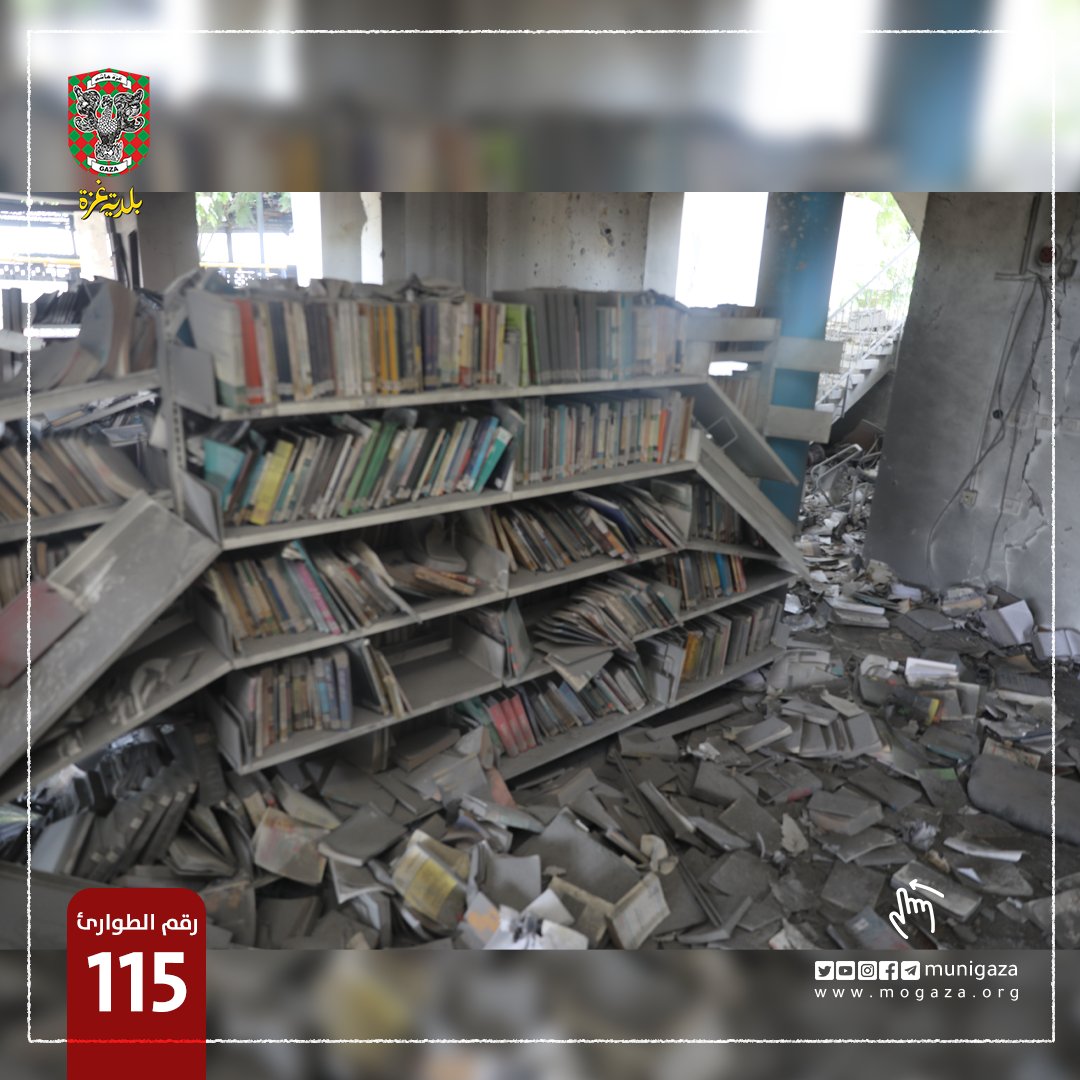
Beyond immediate protection and advocacy, the document gestures toward something deeper: the preservation of intellectual life itself. It acknowledges that there are moments in history, especially in contexts of colonial and imperial destruction, when the preservation of knowledge becomes critical, even as social and material worlds are being annihilated. War and repression do not only destroy buildings and lives; they fracture scholarly communities, interrupt intellectual exchange, erase archives, and sever the slow, cumulative processes through which knowledge is produced.
In response, the guidelines encourage forms of collaboration that are intentionally modest but symbolically powerful: online seminars, reading groups, co-authored work, and invitations to participate in conferences without financial barriers. There are also longer-term aspirations of co-teaching and building curricula in order to think and teach the next generation together. These are not substitutes for freedom of movement or safety, but they are acts of refusal against intellectual isolation. If genocide is intended to render Palestinians illegible, the guidelines aspire to place Palestinian modes of knowledge at the center of an emergent canon.
Equally important is the emphasis on documentation. By collecting testimonies, reflections, and analytical writing from affected scholars, the association can help counter the erasure that often accompanies mass violence. Such materials are not only records of enduring genocide; they are refusals of scholasticide and assertions of presence, voice, and intellectual agency.
A Test for Academic Communities
The significance of this initiative lies not only in its content but in the questions it poses to anthropology and related disciplines: what happens after the vote?
Passing a motion is the easy part. The harder task is sustaining attention once media cycles move on, conferences end, and institutional routines resume. The guidelines acknowledge this by proposing continuity: a standing working group, recurring spaces at future congresses, and long-term relationships rather than one-off gestures.
At stake is not only support for scholars in Palestine and colleagues affected by repression, but the credibility of engaged scholarship more broadly. If academic communities cannot defend their members when research, teaching, and speech intersect with genocide and repression, then claims about ethics, critical inquiry, and social responsibility ring hollow. We must again recognize the limits of our condition. When the pen is opposed to the sword, not much can be done. But silence can (and must!) be confronted.
The motion has already been adopted. What remains is the work of making solidarity ordinary, durable, and real.