
Introduction
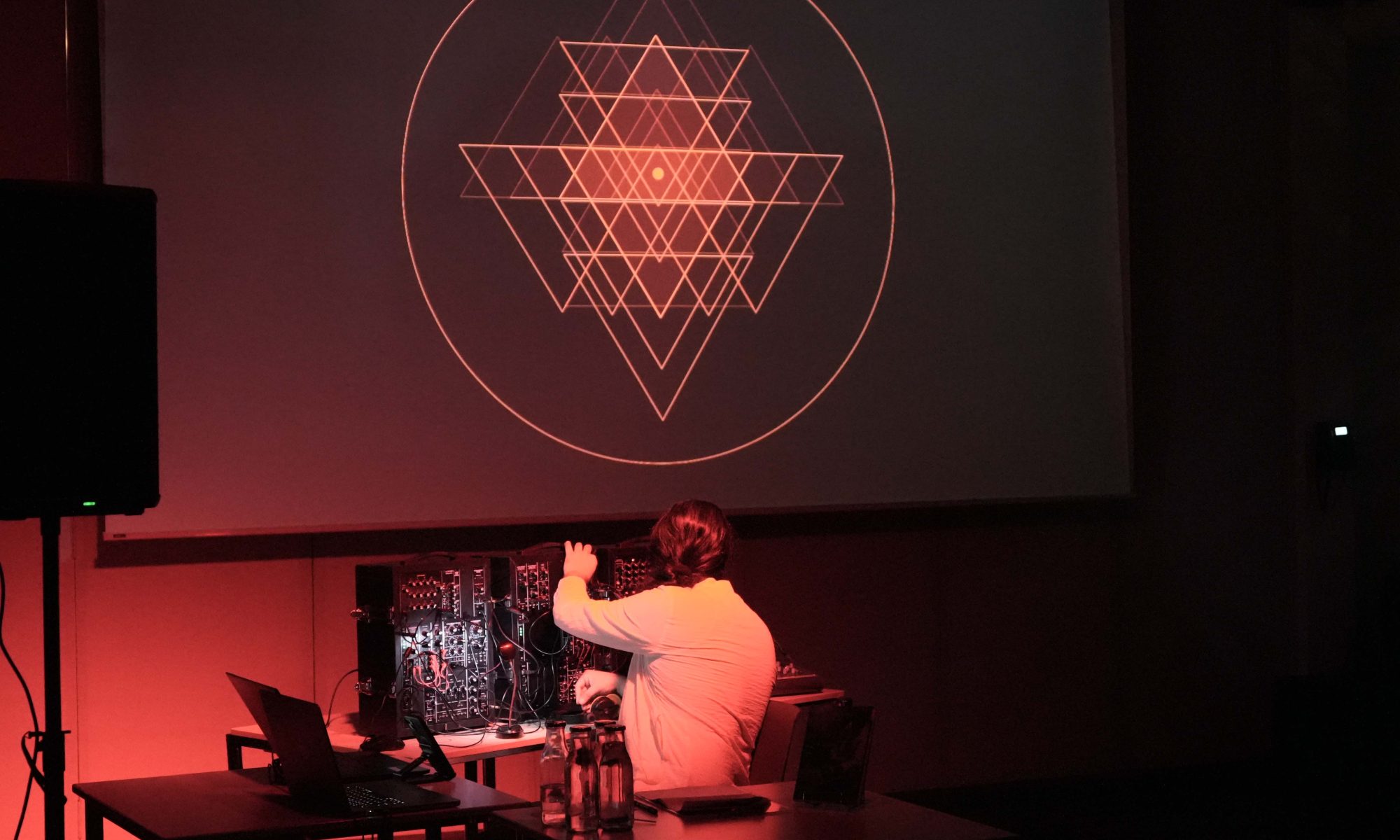
On August 20, 2025, at the Goethe-Institut in Kolkata, a Kolkata-based Computer Engineer and Sound Artist named Varun Desai sat down in front of a modular synthesizer to tune-in to a forgotten chapter of India’s past. Moderately bulky and thick with knobs and wiring, the instrument produced analog waves with the sustained notes of a tanpura. After two years of solitary research, Desai built this instrument as a reconstruction of the first Moog synthesizer to arrive in India. The original instrument reached the National Institute of Design (NID) in Ahmedabad in 1969, which was shipped in wooden crates from Robert Moog’s factory in Trumansburg, New York. By the 1970s, as funding waned and institutional interest faded, the machine slipped into disuse. Its last known trace appears in a shelter for stray animals on the outskirts of Ahmedabad, where the synthesizer was located in the possession of a former NID faculty member. Apart from this information, the afterlife of this machine remains largely undocumented. Except for a handful of individuals who have persistently laboured to excavate its origin and whereabouts, there has been limited scholarly or public interest in the history of the Moog synthesizer in India, or in the history of the Indian electronic music scene in general. Had this instrument survived the tortures of time, neglect, and oblivion, it might have been able to tell the unknown sonic history of India – and the aspirations of a newly independent nation.
Desai’s version is built at a sixty percent scale and is portable enough to travel with. By his own estimate, the instrument remains as faithful to the original’s internal architecture as possible. It is re-imagined from archival photographs, early Moog schematics and whatever scattered fragments of documentation he could locate. Inspired by the landmark debut album Switched-On Bach (1968) by American composer Wendy Carlos, in which she performs selected pieces of German music composer of the late Baroque period, Johann Sebastian Bach on an early Moog modular synthesizer, Desai named his project Switched on India. While Switched-On Bach was a huge commercial success and is still held responsible for bringing the synthesizer into mainstream musical practice, Desai’s project unearths an alternative story of the Moog synthesizer that came to India around the same time – a story that is poorly archived in the history of global music. Switched on India, according to Desai, is an attempt to recuperate the lesser known story of India’s past through its lost sounds.
The Vanishing Past
Much of what we know today about NID’s pioneering experiments with electronic music owes to the archival work of the UK-based artist and musician Paul Purgas. A member of the electro-acoustic duo Emptyset and originally trained as an architect, Purgas first encountered the instrument’s story around 2015-16 when author Alexander Keefe’s essay on the online art journal East of Borneo (2013) appeared on his social media timeline. Keefe’s essay recounted the arrival story of India’s first custom-built Moog modular synthesizer at the National Institute of Design in Ahmedabad in 1969. The instrument had been imported from Robert Moog’s workshop in Trumansburg, New York, by Indian musician Gita Sarabhai, with the help of American composer David Tudor (1926-1996). Purgas traveled to NID the following year to trace the instrument’s history. While searching through the institute’s archives, he discovered a handwritten note from 1969 marked “Tapes for David”. The note led him to a cache of twenty-seven reel-to-reel recordings produced between 1969 and 1972 by composers working in what was arguably India’s first electronic music studio. The collection included works by several Indian composers such as Gita Sarabhai, I. S. Mathur, S. C. Sharma, Atul Desai and a then nineteen-year-old architecture student, Jinraj Joshipura. Purgas painstakingly restored and digitized these tapes. In 2023, these recordings were released internationally as The NID Tapes (Purgas 2023), following the 2020 BBC Radio 3 documentary Electronic India (Purgas 2020). He later published a book titled Subcontinental Synthesis: Electronic Music at the National Institute of Design, India 1969-1972 (2024). It was an edited volume of essays that situated the studio within the broader history of India’s postcolonial ambitions and the nation’s investment in science, technology, and the emerging pedagogy of design.
The long-term value of this archival initiative can be enhanced if these collections are made to circulate beyond institutional repositories for wider public engagement. Making archives available through public-facing platforms and creative modes of dissemination may foster new forms of historical inquiry among people. Such initiatives can encourage diverse audiences to engage with, question, and build upon the past, while enabling the production of newer forms of historical knowledge. Desai’s work extends Purgas’ ongoing project of archival preservation by disseminating historical knowledge in innovative and creative forms that reach wider publics through interactive performance, lectures and workshops. While the labours of restoration, digitization, and publication work undertaken by Purgas followed a systematic arc of archival preservation, Desai’s initiative to rebuild the missing instrument and perform on it can expand the intellectual and cultural afterlife of that archive. The newly built synthesizer, in that sense, is not a museum replica, which would serve only as evidence or a record of the past. It is built expressly to recreate the possible sounds of India’s past for them to be heard and experienced in the present. In other words, it is an attempt to materially restore the vanishing past in which human ears become the primary sites of restoration.
During my conversation with Desai in Kolkata during the summer of 2025, I noticed a spark of ambition in his eyes. Beneath the calm and composed stillness of his facial expressions similar to the meditative stillness of the white-noise drones he produced on his instrument during one of his recent performance lectures held at the Satyajit Ray Film and Television Institute (SRFTI), Kolkata in September 2026, a subtle note of anguish lingered around the fact that India’s electronic music history, so rich in its own right, is barely documented, restored or preserved. A certain kind of academic apathy and oblivion towards this forgotten chapter of India’s electronic past is perhaps the reason for his anguish. “How many academics have come and worked on this? What were they doing with this for decades, sitting there?” – he asked. I did not have a response. Despite his anguish, Desai expressed gratitude for this neglect. He says, “I’m grateful that this has happened, which is why I started building this project.” Desai is not a historian by training and for most of his career has worked as a computer engineer, lecturer, curator, and music promoter in India. He learned about the Moog synthesizer when the BBC contacted him in 2020 for a documentary project. For a musician who had spent two decades trying to build an audience for experimental electronic sound in India, being told about India’s own foundational electronic music archive by a broadcaster from abroad was, he admits, an embarrassing experience. He said: “I didn’t know about it. I got exposed to this because the BBC called me for an interview. Then I started digging, and it was like an iceberg.”
Building The Archive
While practitioners lament the loss of the instrument over the years and write about the archival lacuna, Desai’s decision to rebuild the instrument from scratch and make new music on it shall do the work of a different kind of historiography. The sounds created with the use of the new instrument are meant to help people immerse themselves, according to Desai, into “a multisensory journey, inviting audiences to hear India’s past and present in new ways” (Switched on India n.d.). During my interview, Desai defined his project as a work of “sonic archaeology”.
The term sonic archaeology does not have a single point of origin. Since the 1990s, it has appeared in various scholarly and artistic fields of practice. For instance, scholars writing histories of radio have used archaeological metaphors to reconstruct lost sound worlds from non-sonic traces such as station logs, scripts, and oral testimony in the absence of surviving recordings (VanCour 2018). In hip-hop culture, the role of a crate-digger is a familiar figure of sonic archaeologist who is known for hunting obsolete vinyl in basements and thrift stores for a decades-old break worth resurrecting (Schloss 2004, 79-100). In his book More Brilliant than the Sun (1998), British-Ghanaian theorist and filmmaker Kodwo Eshun deployed a similar technique of sonic archaeology where he described Afro-diasporic electronic music as a machine capable of generating speculative futures by deliberately rejecting socio-historical readings in favor of Afrofuturist world-building. Therefore, as a practice, sonic archaeology is oriented towards the recovery or rebuilding of what has been lost, buried or silenced.
Desai says that his instrument is built at a sixty-percent scale wherein the original instrument’s capacitors and resistors, which are no longer manufactured, are substituted with contemporary equivalents. Certain modules remain deliberately incomplete and held back by what Desai has not yet been able to afford to build. Therefore, to cope with the absence of material-archival resources, Desai’s method pushes this archaeological intervention to an affective register of performance where the past can not only be known but felt, touched and experienced through a sonorous archive.
Resounding Histories
“We are not copycats, we are the originators,” says Desai while speaking of the NID composers. The two years he spent building the instrument were entirely self-financed and deliberately kept outside the ambit of institutional involvement. No grants, collaborations or support from cultural bodies in India or abroad. In his own words, it is a “home-grown project” purposefully developed without external institutional backing. Now that the instrument is finally built and ready to be performed live, Desai’s years of independent, self-funded labor have attracted the attention of the global sound art and experimental music communities. After his performance at the Goethe-Institute in Kolkata last year, Kulturamt der Stadt Köln (Cultural Office of the City of Cologne) in Germany has hosted his performance this year at Soirée Sonique, an event dedicated to sound-based arts held at a distinctive cultural venue housed inside the twentieth-century Luther Church Tower called LTK4 (LTK4 2026). Originally a neo-Renaissance Lutheran church, the tower was built between 1904 and 1906 (Evangelischer Kirchenverband Köln und Region 2006).
On October 15, 1944, the tower was hit by several bombs and the structure of the church was reduced to its foundation walls (Lutherkirche Köln n.d.). Badly damaged and stripped of its spire, the walls still bear visible scars from the war. Since 2017, the tower has housed LTK4, an autonomous space for sound-based art practice, repurposed because of its distinctive architectural features. Inside the tower, there is a vertical sequence of five stacked chambers linked by narrow staircases that opens into a cathedral-scale bell chamber. Each level differs in spatial dimensions, reverberation, lighting, and temperature. As one ascends higher, the tower facilitates an experience of moving through a series of acoustically distinct rooms. The masonry, staircases, filtered street noise and shifting acoustics, all shape how the range, scope and depth of human hearing can be explored within this architectural marvel. Hence, it is no coincidence that the history of India’s sonic-electronic past is assembled here, block by block, cemented by the audio frequencies of an otherwise lost machine, at a site charged with the historical sounds of bombing and devastation.
Desai traveled nearly 8,000 kilometers from his hometown to assemble the foundational blocks of India’s technological and sonic past. But before all of these happened, for years, he consciously chose to save and invest his own money. He believed that dependence on institutional funding could have jeopardized the autonomy of this project. “I’m saving. Every time I save a little, I save a bit”, he told me during the developmental stages of this project, when we met in Kolkata.
Trained as a computer engineer at Purdue University, Desai spent years building automation systems and working on filtration equipment in coal and limestone mines across Rajasthan, Bengal and Gujarat before shifting entirely into music. Although not formally trained as a historian, Desai positions himself as a creator who redesigns the path towards historical knowledge through sound, codes, circuits and machines. His approach is not limited to rebuilding the Moog. Desai has spent years picking up old synthesizers and machines from auction houses and estate sales. His love of restoration comes from a belief that objects built in the previous decades were made to be intrinsically enduring. He says that “machines built in the 1970s or earlier were designed with both usability and durability in mind, as opposed to the direction we’ve taken now, where everything is replaced and discarded every few years.” Therefore, the reconstruction of the lost synthesizer seems to hold the potential of unboxing the ethics of life and longevity embedded in machines of the so-called past, for instance, how instruments were designed, engineered and built to endure. But what does the temporal endurance of machines mean for the practice of writing histories?
Desai’s predicament is nurtured in Kolkata, a city where sustaining a serious creative practice while supporting a family is a matter of persistent financial strain, especially due to little or no institutional patronage and inadequate funding for experimental or non-commercial work. Alongside two children and a household in Kolkata, the touring life is not easier to sustain. “It is not an excuse,” he says. While talking about the inherent tension between maintaining stability between family and this kind of experimental work, Desai remarked, “I know so many amazingly talented people who just didn’t continue.” Thus, if a project like Switched on India, which came out of years of self-funded work carried out outside formal institutional settings in a resource-constrained city like Kolkata, manages to rewrite the global history of electronic music, it will raise broader questions about where historical knowledge is ought to be produced and by whom? It would further suggest that the work of history writing is not confined to the academy, but can also take shape in workshops, studios, rehearsal spaces and performance venues. But before I arrive at ambitious futuristic claims, for now, it would be safe to conclude that, Switched on India is a call to rethink what it means to speak of the life of a machine, the life of a nation and the life of history – through sounds.
References
Carlos, Wendy. 1968. Switched-On Bach. With Benjamin Folkman. Columbia Records MS 7194, LP.
Eshun, Kodwo. 1998. More Brilliant than the Sun: Adventures in Sonic Fiction. London: Quartet Books.
Evangelischer Kirchenverband Köln und Region. 2006. “100 Jahre Lutherkirche: 1906 eingeweiht, unter Anwesenheit ‘vieler hoher Vertreter von Staat und Stadt.’” [100 years of the Luther Church: Consecrated in 1906 in the presence of “many high representatives of state and city”]. July 4, 2006. https://www.kirche-koeln.de/100-jahre-lutherkirche-1906-eingeweiht-unter-anwesenheit-vieler-hoher-vertreter-von-staat-und-stadt/.
Keefe, Alexander. 2013. “Subcontinental Synth: David Tudor and the First Moog in India.” East of Borneo, April 30, 2013. https://eastofborneo.org/articles/subcontinental-synth-david-tudor-and-the-first-moog-in-india/.
LTK4. 2026. “Residency Varun Desai.” LTK4 Klangbasierte Künste Köln. Accessed September 28, 2026. https://ltk4.de/portfolio/residency-26-2/.
Lutherkirche Köln. n.d. “Zeittafel Lutherkirche” [Timeline of the Luther Church]. Accessed September 28, 2026. https://lutherkirche-koeln.de/zeittafel-lutherkirche/.
Purgas, Paul. 2020. “Electronic India.” Sunday Feature. BBC Radio 3, May 17, 2020.
Purgas, Paul, comp. 2023. The NID Tapes: Electronic Music from India 1969–1972. London: state51 Conspiracy.
Purgas, Paul, ed. 2024. Subcontinental Synthesis: Electronic Music at the National Institute of Design, India 1969–1972. London: Strange Attractor Press.
Schloss, Joseph G. 2004. Making Beats: The Art of Sample-Based Hip-Hop. Middletown, CT: Wesleyan University Press.
Switched on India. n.d. “About.” Accessed September 28, 2026. https://switchedonindia.com/about/.
VanCour, Shawn. 2018. Making Radio: Early Radio Production and the Rise of Modern Sound Culture. New York: Oxford University Press.